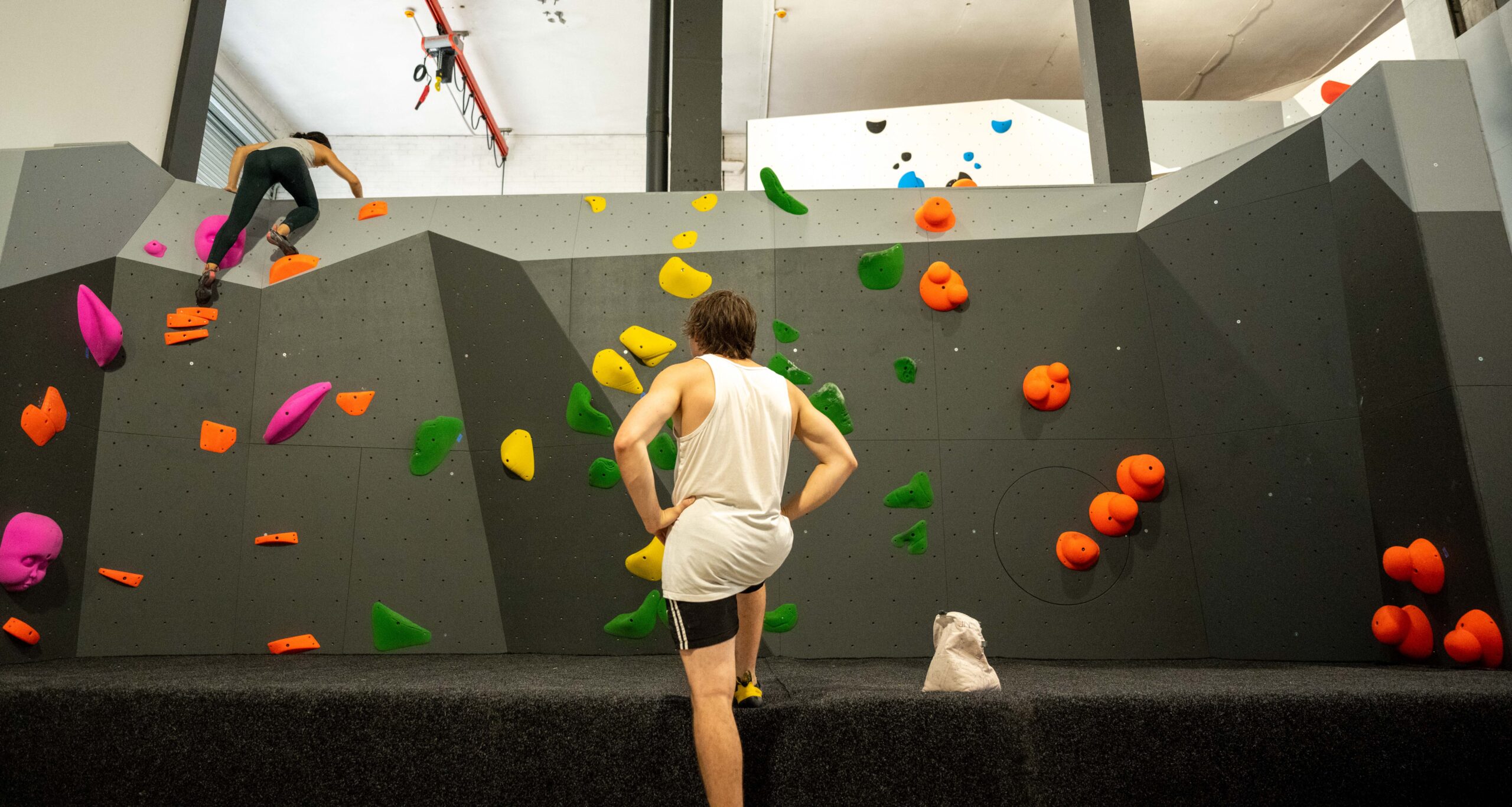
Climbing places significant demands on the entire body, from the fingers and forearms through to the hips, knees and ankles. While much of the focus is often placed on upper-limb injuries, ankle sprains are also relatively common, particularly within the bouldering community.
Whether you’re attempting a challenging problem or moving between holds, an awkward landing, rolled ankle or unexpected fall from the wall can place considerable stress through the ankle. Although these injuries are often difficult to avoid completely, there are several things you can do to improve ankle strength, stability and control, helping reduce your risk of injury and keep you climbing.
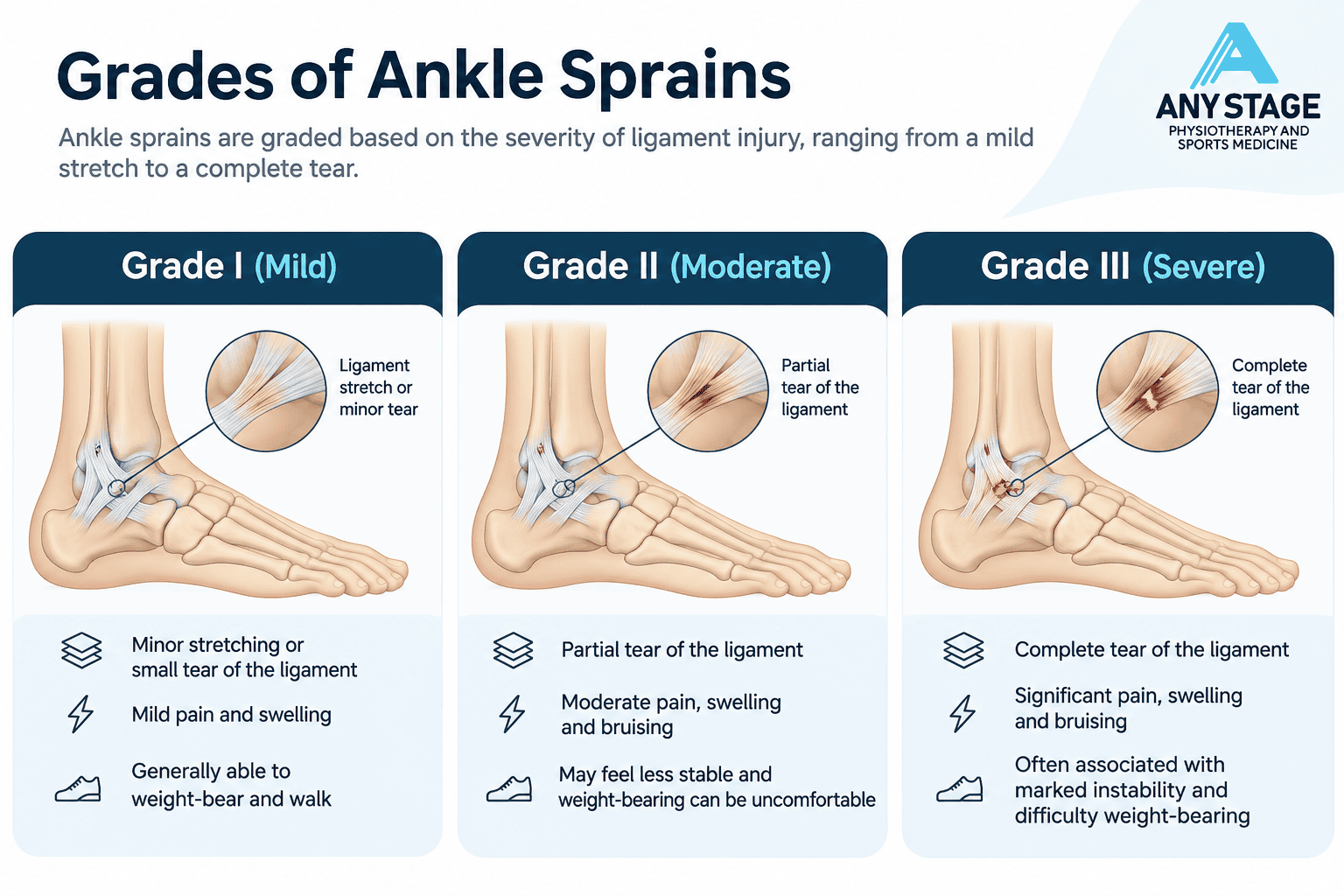
An ankle sprain occurs when the ligaments supporting the ankle are stretched or torn. This most commonly happens when the foot rolls inwards, known as an inversion injury, placing excessive stress on the ligaments along the outside of the ankle.
Ankle sprains are generally classified into three grades depending on their severity:
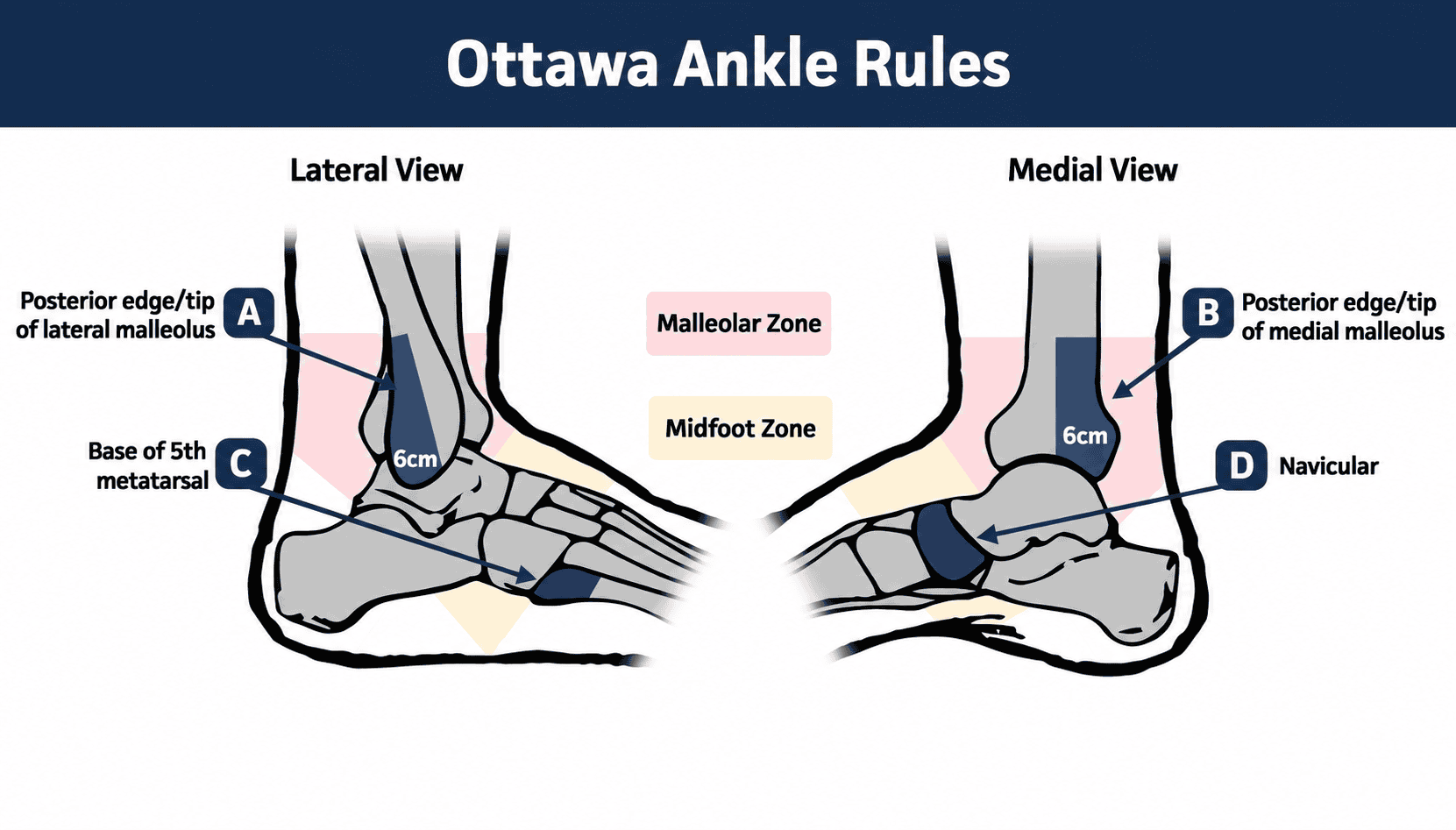
It is also important to recognise that not every ankle injury is simply a ligament sprain. Depending on the mechanism, there may also be associated bone bruising or a fracture, including an avulsion fracture, where a small piece of bone is pulled away by the attached ligament.
The Ottawa Ankle Rules are a clinical screening tool used by healthcare professionals to help determine whether an X-ray may be required following an acute ankle injury. They consider factors such as tenderness over specific bony areas around the ankle and foot, as well as the ability to take four steps following the injury. If you’ve injured your ankle and are unable to walk on it, or have tenderness over these bony areas, it’s worth seeing a doctor or physiotherapist to check whether an X-ray is needed.
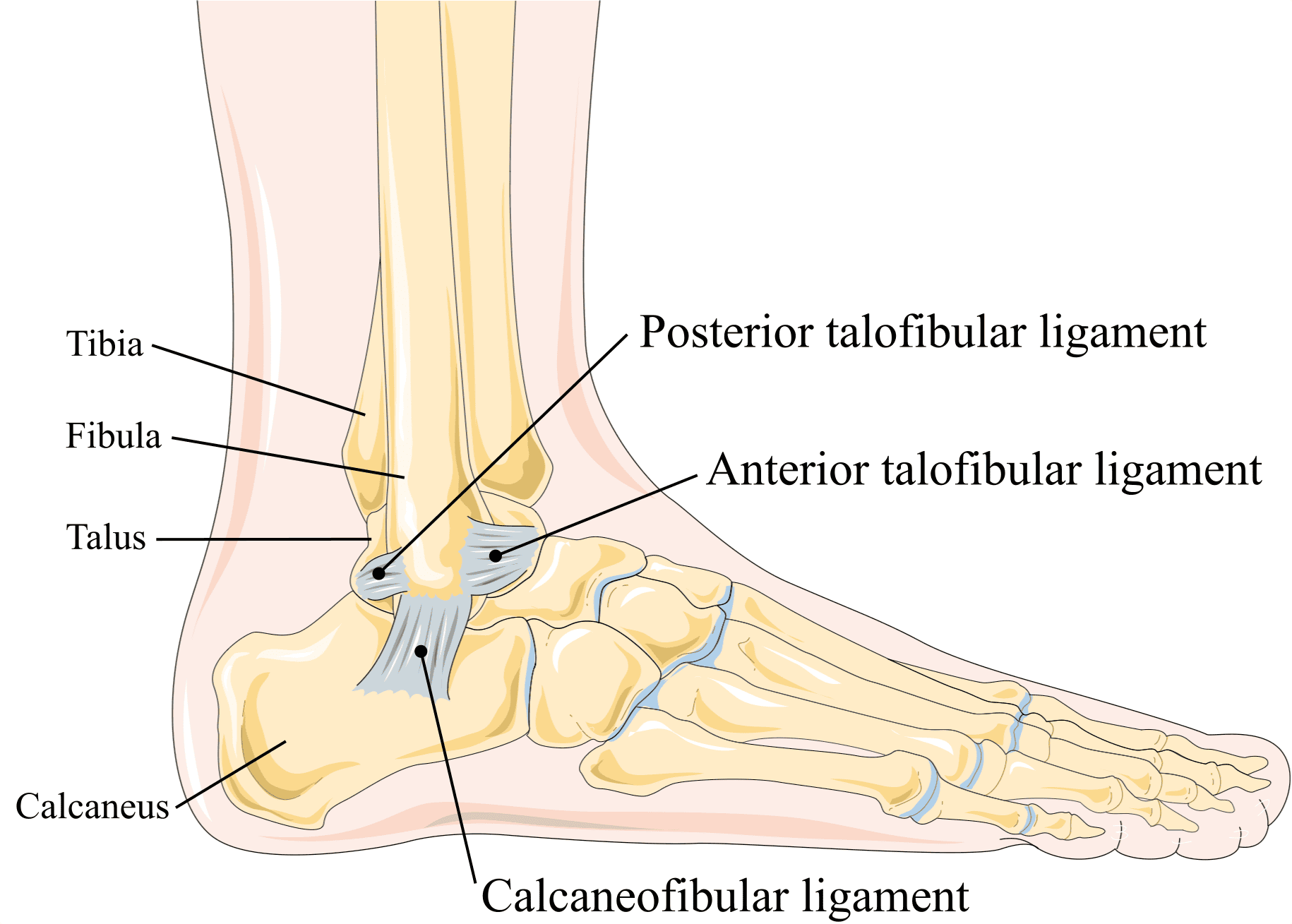
The ankle is supported by several ligaments that help provide stability and control excessive movement around the joint.
The most commonly injured structures during an inversion ankle sprain are the ligaments on the outside of the ankle, collectively known as the lateral ligament complex. These include the anterior talofibular ligament (ATFL), calcaneofibular ligament (CFL) and posterior talofibular ligament (PTFL).
The ATFL is the most commonly injured ligament, particularly during awkward landings where the foot rolls inwards. The CFL may also be involved, particularly in more significant sprains.
While you can’t prevent every awkward landing, improving ankle strength, stability and control can help reduce your risk of injury and better prepare you for the demands of climbing.
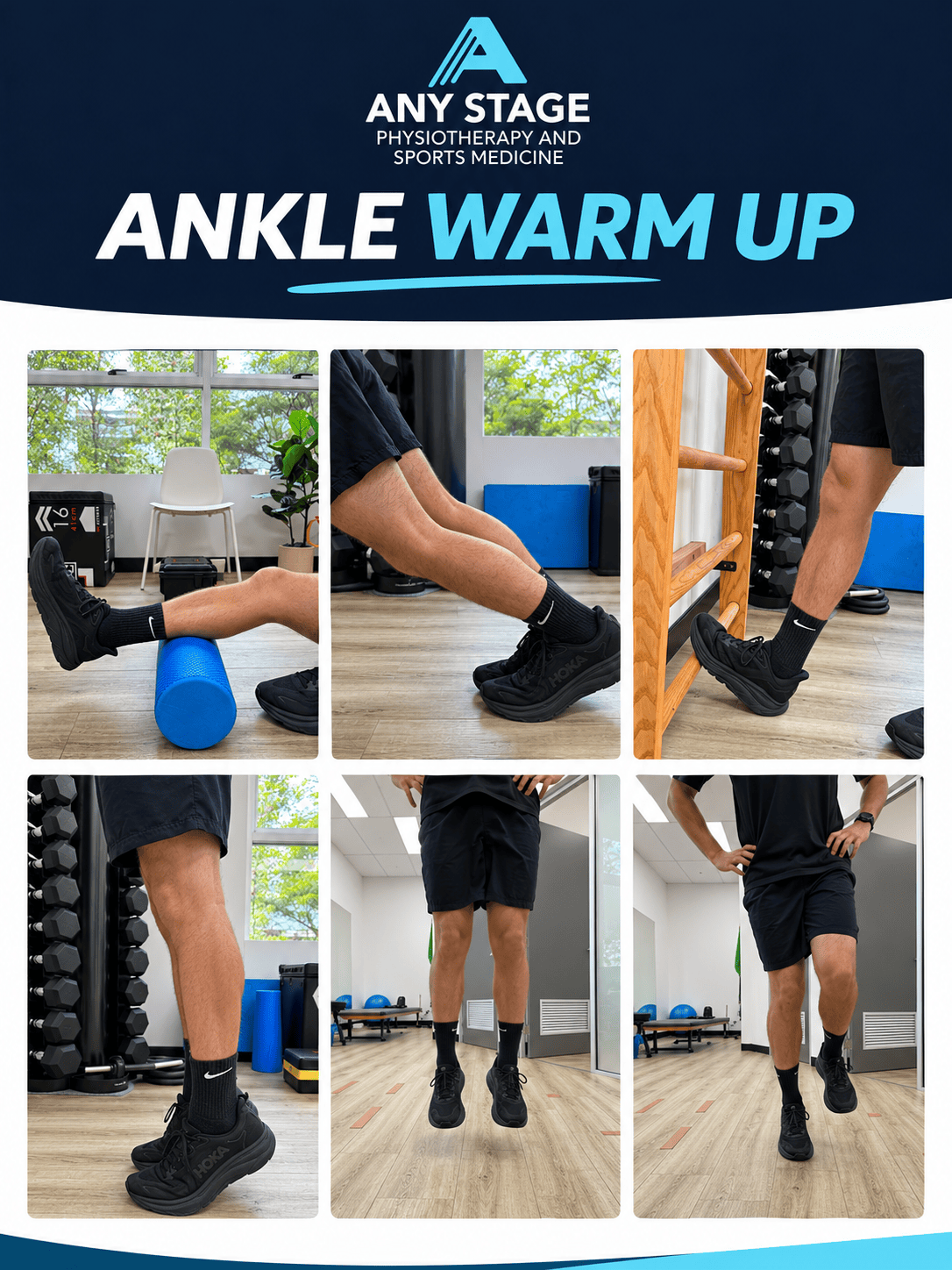
A progressive warm-up helps prepare your muscles and joints for the demands of climbing. Before getting onto the wall, spend a few minutes incorporating ankle mobility, strengthening and plyometric exercises to gradually prepare your lower limbs for activity.
Screenshot this warm-up routine to try before your next session on the wall.
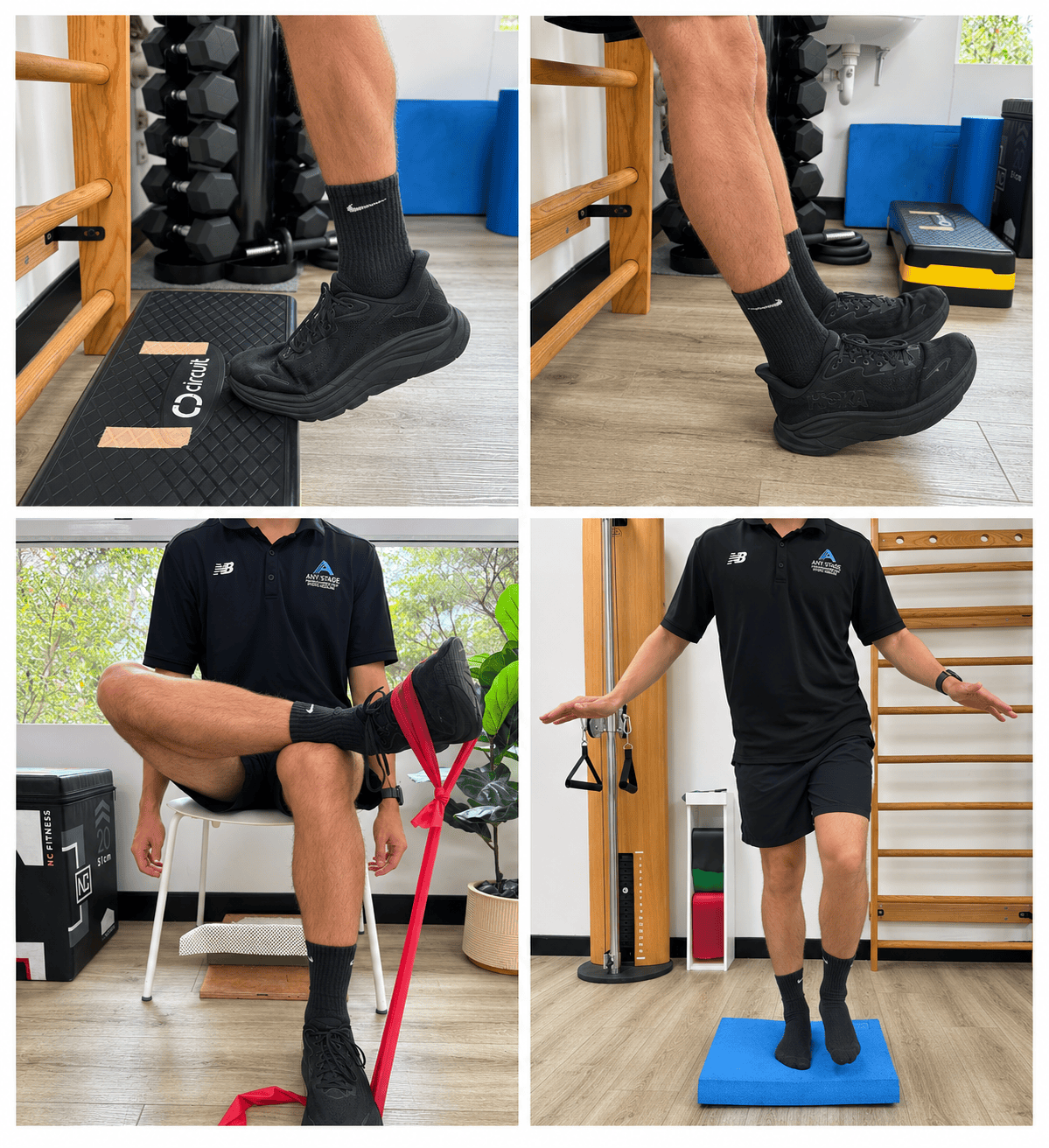
Strengthening the muscles surrounding the ankle is important for improving stability and controlling movement, particularly during unexpected landings. The calf muscles, peroneals, tibialis anterior and tibialis posterior all play an important role in supporting the ankle.
Exercises such as calf raises, resisted ankle inversion and eversion, tibialis anterior raises and single-leg balance exercises can help develop strength and proprioception. As your strength and control improve, progressing towards hopping and landing exercises can further prepare your ankle for the demands of climbing.
For climbers, developing good landing control is particularly important. Practising controlled landings, absorbing impact through your hips and knees, and avoiding stiff-legged landings can help distribute forces more effectively through the lower limbs.
Make sure you’re wearing appropriate climbing shoes that fit correctly and are suitable for the type of climbing you’re doing. If you don’t have your own climbing shoes, speak with the Climb Fit team about hiring a pair.
For bouldering, understanding how to fall safely is equally important.
Familiarise yourself with the appropriate falling technique and practise absorbing impact through your lower limbs rather than landing with stiff legs. Where appropriate, rolling with the momentum of the fall can also help distribute impact and reduce the forces placed through your ankles and other joints.
Watch this video 👇
A NOTE ABOUT ROPED CLIMBING: For rope climbing, controlled lowering is also important. Belayers should aim to lower their climbing partner smoothly, avoiding sudden drops or abrupt changes in speed.
If you’ve previously sustained an ankle sprain, strapping or an ankle brace may provide additional support and confidence when returning to climbing. These can be particularly useful during more demanding sessions or when progressing back towards harder grades. Find one here online
However, they should be used alongside a progressive strengthening and rehabilitation program rather than as a replacement for it.
One of the biggest challenges with ankle sprains is their tendency to recur. Previous ankle sprains are one of the strongest risk factors for sustaining another injury.
Even when pain and swelling have settled, the ankle may still lack the strength, balance and stability required to tolerate the demands of climbing. Returning to the wall too quickly without adequately rebuilding these qualities can increase the likelihood of another sprain.
Rehabilitation should focus on restoring ankle range, calf and ankle strength, balance, proprioception and confidence with landing and jumping activities.
An ankle sprain doesn’t necessarily mean you need to stop exercising altogether. The appropriate level of activity will depend on the severity of the injury and how well the ankle is recovering.
In many cases, the goal is to gradually reintroduce activity rather than completely avoid it. This may involve temporarily modifying your climbing sessions, focusing on easier routes and avoiding dynamic movements or challenging landings until your ankle has regained adequate strength and control.
The aim is to get you back on the wall safely while reducing the likelihood of another injury.
At Any Stage Physiotherapy and Sports Medicine, we understand the physical demands of climbing and the importance of keeping your body strong, mobile and resilient. Whether you’re bouldering, climbing or working towards your next grade, we provide physiotherapy support to help manage climbing-related injuries, improve physical capacity and keep you progressing on the wall.
We’re proud to be partnering with Climb Fit to support local climbers through injury prevention, education and accessible physiotherapy advice.
Whether you’re experiencing finger, elbow, shoulder or ankle pain, dealing with a recurring climbing-related injury or looking to improve your physical preparation for climbing, come and have a chat with us at our next Any Stage Physiotherapy pop-up at Climb Fit. We’ll be offering physiotherapy assessments, practical advice and guidance to help you stay injury-free and continue enjoying your time on the wall.
Drew Sellers - BSpExSc, DPT, APAM
Physiotherapist, Any Stage Physiotherapy and Sports Medicine
