
Trip report by Di Westaway OAM, Chief Adventure Chick Wild Women On Top
Check her out on Instagram HERE
...
I went to Japan for the climbing.
Of course.
This wasn’t a “maybe we’ll climb if there’s time” trip. This was a mission. I’d heard nothing and knew nobody who’d been there just to climb but a quick Google search of sport climbing in June near Tokyo found Mt Ogawayama - Japan’s Yosemite, they said.
Well … that was a stretch, but in the end we were blown away by the beauty, quality of the rock, variety of climbs and the beauty.
Within 24 hours of arriving I was thinking: why is no one talking about this more?
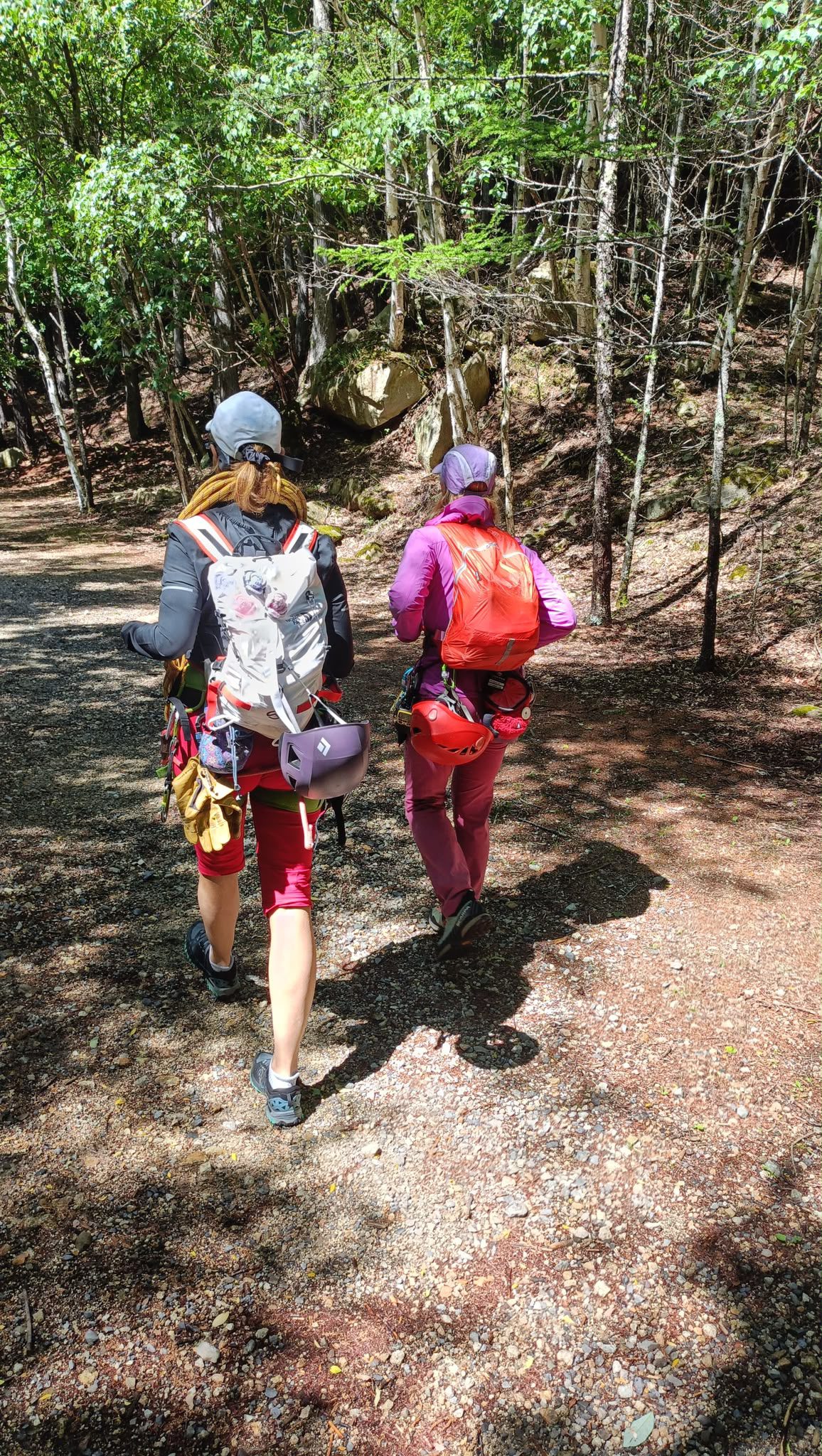
You wake up in Tokyo. Full sensory overload, perfectly ordered chaos, vending machines everywhere and the next thing you know you’re on a train heading out of the city.
This is what got me first.
You don’t have to travel halfway across a continent to get to world-class climbing.
Within a few hours, you’re pulling into Shino-Kawakami Station, and suddenly it’s rural. Proper countryside. Forests. Mountains. No noise pollution, no visual clutter. Just nature.
We were picked up by our guide and taken to Iwane Sanso, a traditional mountain lodge that feels like it hasn’t changed in decades (and probably hasn’t). Tatami mats, sliding doors, zero excess. A well oiled machine in the off season.
No “adventure branding.” No curated aesthetic.
Just… Japan.
And then you drive for twenty minutes - and there it is.
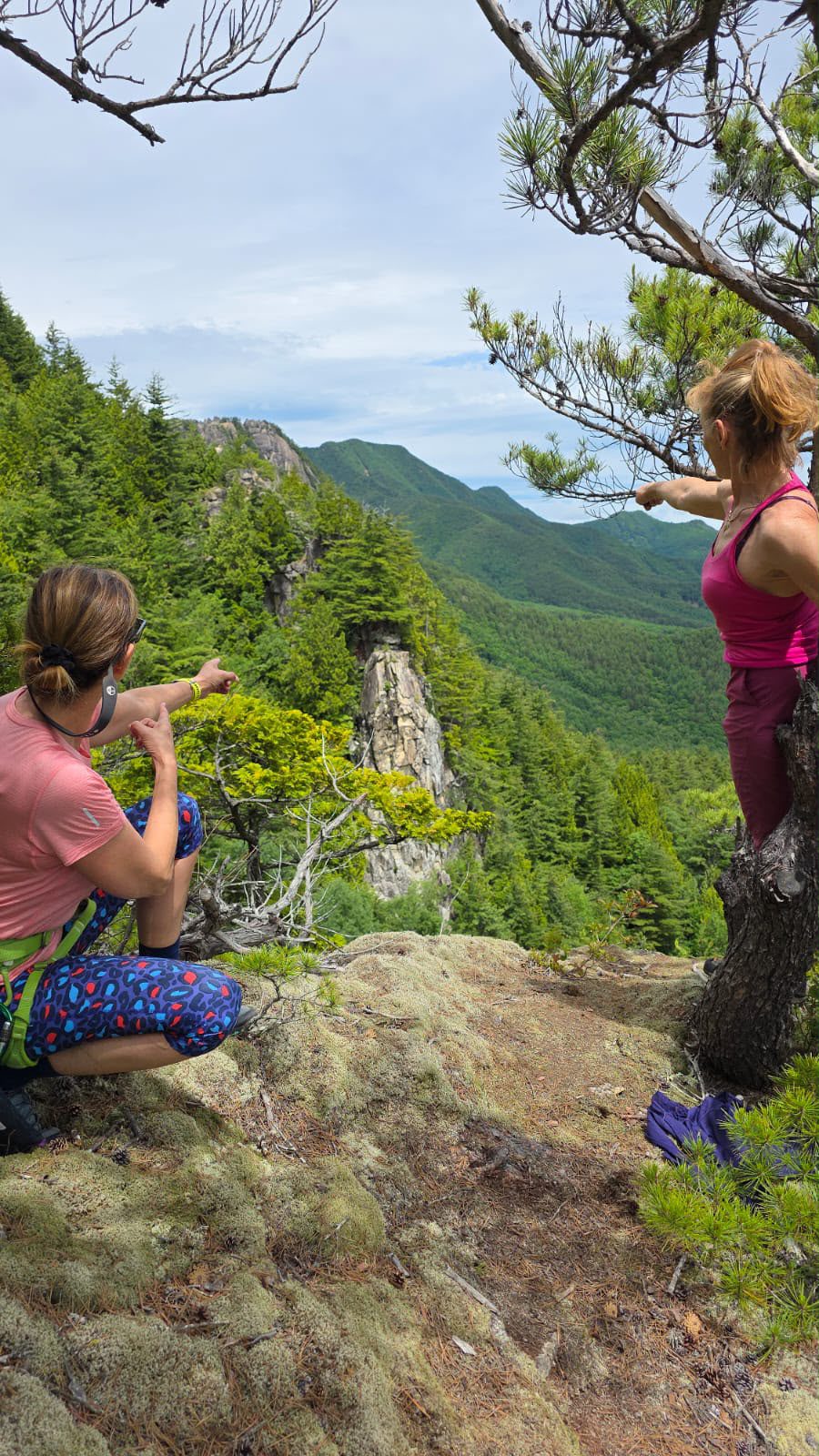
Hidden granite boulders, pillars, towers, slabs, pyramids and peaks nestled in the forest for miles.
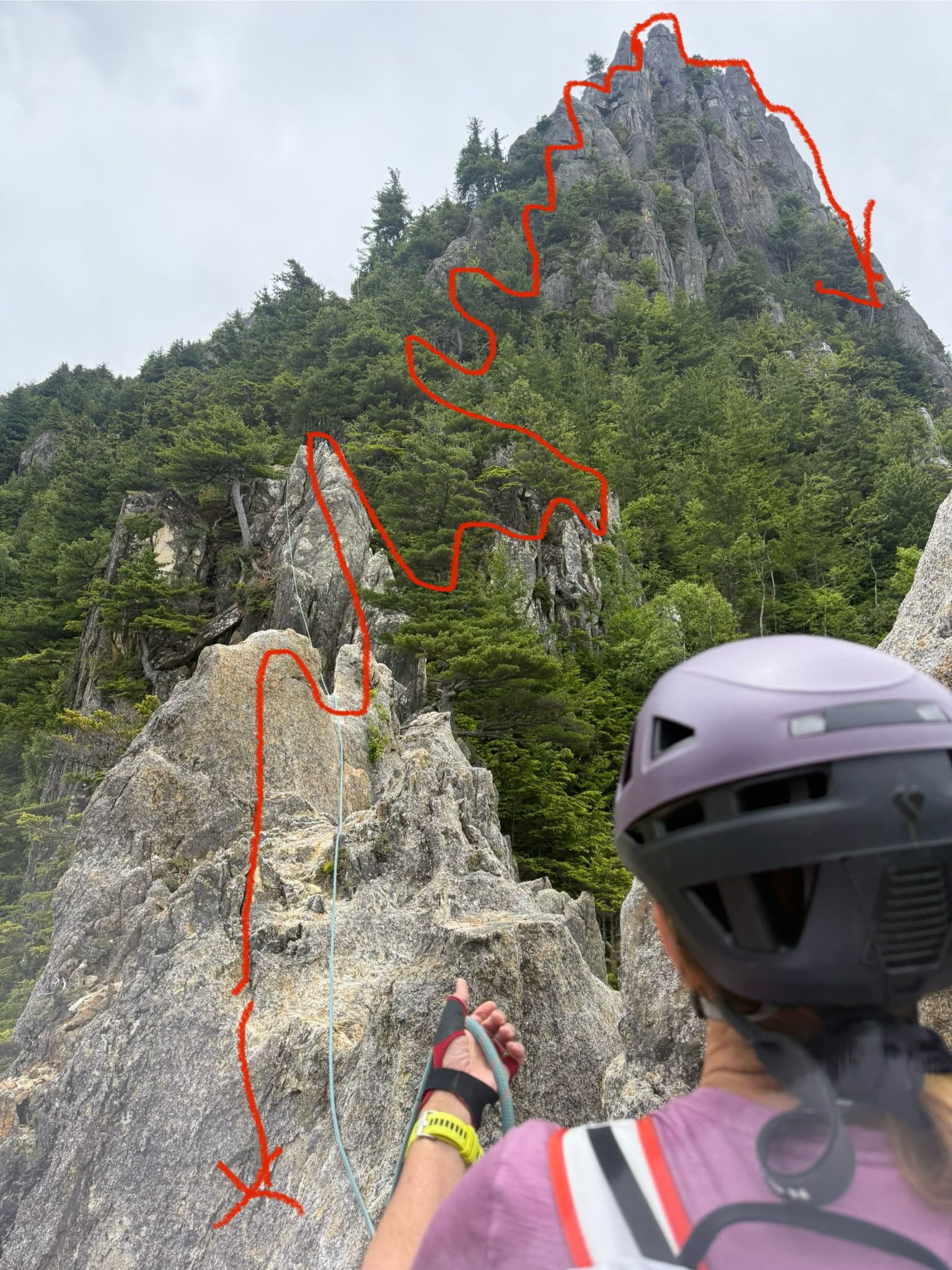
Mt Ogawayama (2,418m) is often called the Yosemite of Japan.
This time, the comparison almost holds up.
The rock is the real deal:
It’s not a one-dimensional crag. It’s a full ecosystem of mini crags in every direction.
You can boulder in the morning, jump on a single pitch in the afternoon, and try a multipitch before dinner if you're fast. We weren’t but you could be.
And the setting? Dense, ancient forest. Moss. Rivers. It feels old in a way that a lot of climbing areas don’t.
If you’ve climbed in Europe or the US, you’re used to things being easy.
Download topo. Drive in. Climb. Done.
Japan doesn’t work like that.
And if you’re not careful, you can get taken for a ride price-wise.
We nearly did.
That’s not a criticism of Japan. It’s just what happens when a well-established local climbing culture meets foreign demand.
So here’s me, cutting through the noise:
Do not wing this trip.
Connect in advance. Ask questions. Compare options. Send lots of messages. Get on Facebook groups.
The “Rock Climbing Japan” facebook group is genuinely useful. We also used Grey Power (50+ climbers) because we are, and in a place like this you want all the help you can get before you leave home.
We spent our first few days with Simon - Irish/Japanese, enthusiastic, still finding his way as a guide.
And honestly? It worked.
There was no over-structured, over-managed feel to it. We just got out and climbed:
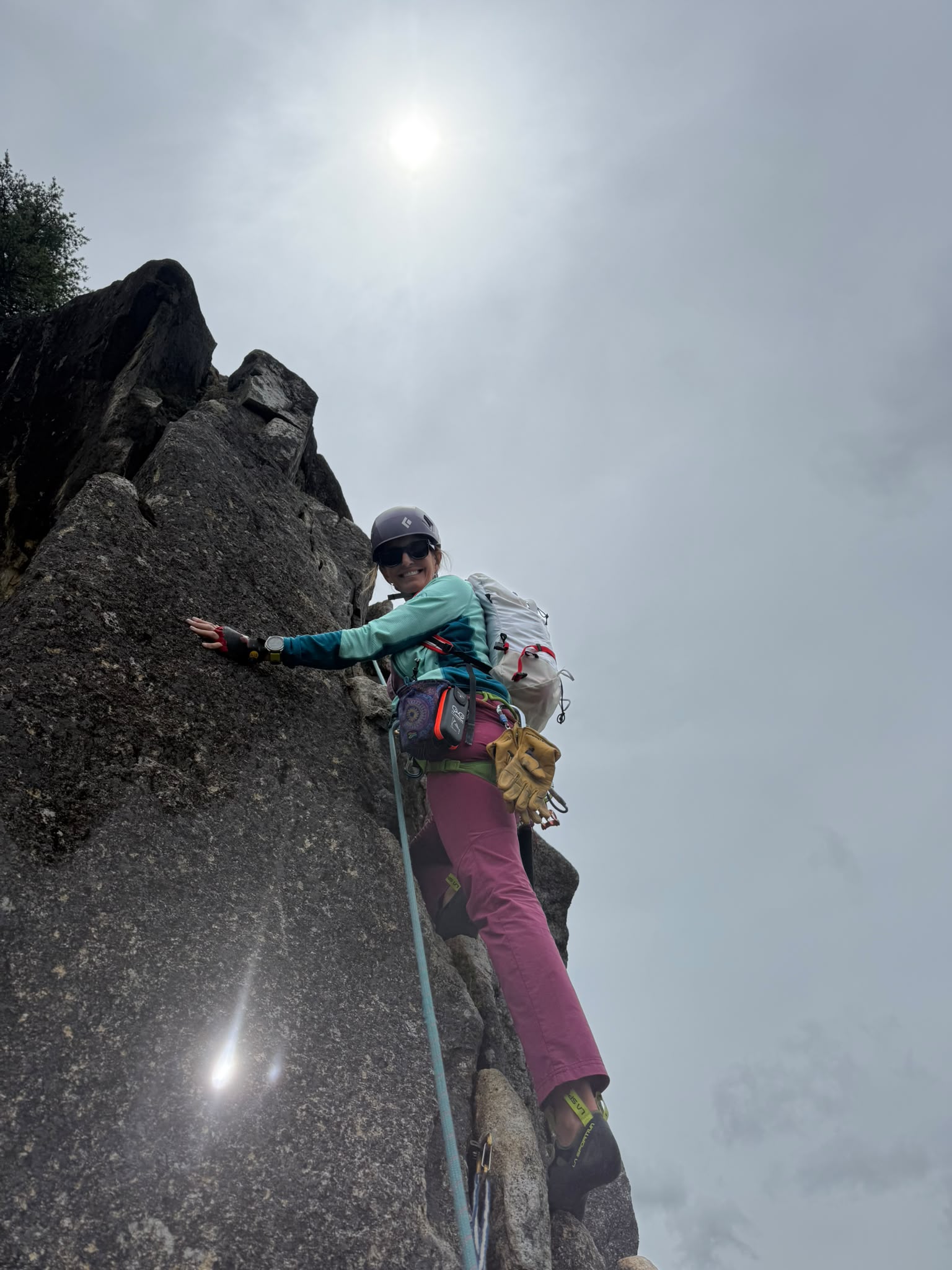
Good, varied climbing, nothing polished, steep access trails in deep forest. It's adventurous and some of it looks sketchy. I didn’t trust it but the others did. Scenic, high, low, by the stream, creative bolting.
You don’t cruise at Ogawayama.
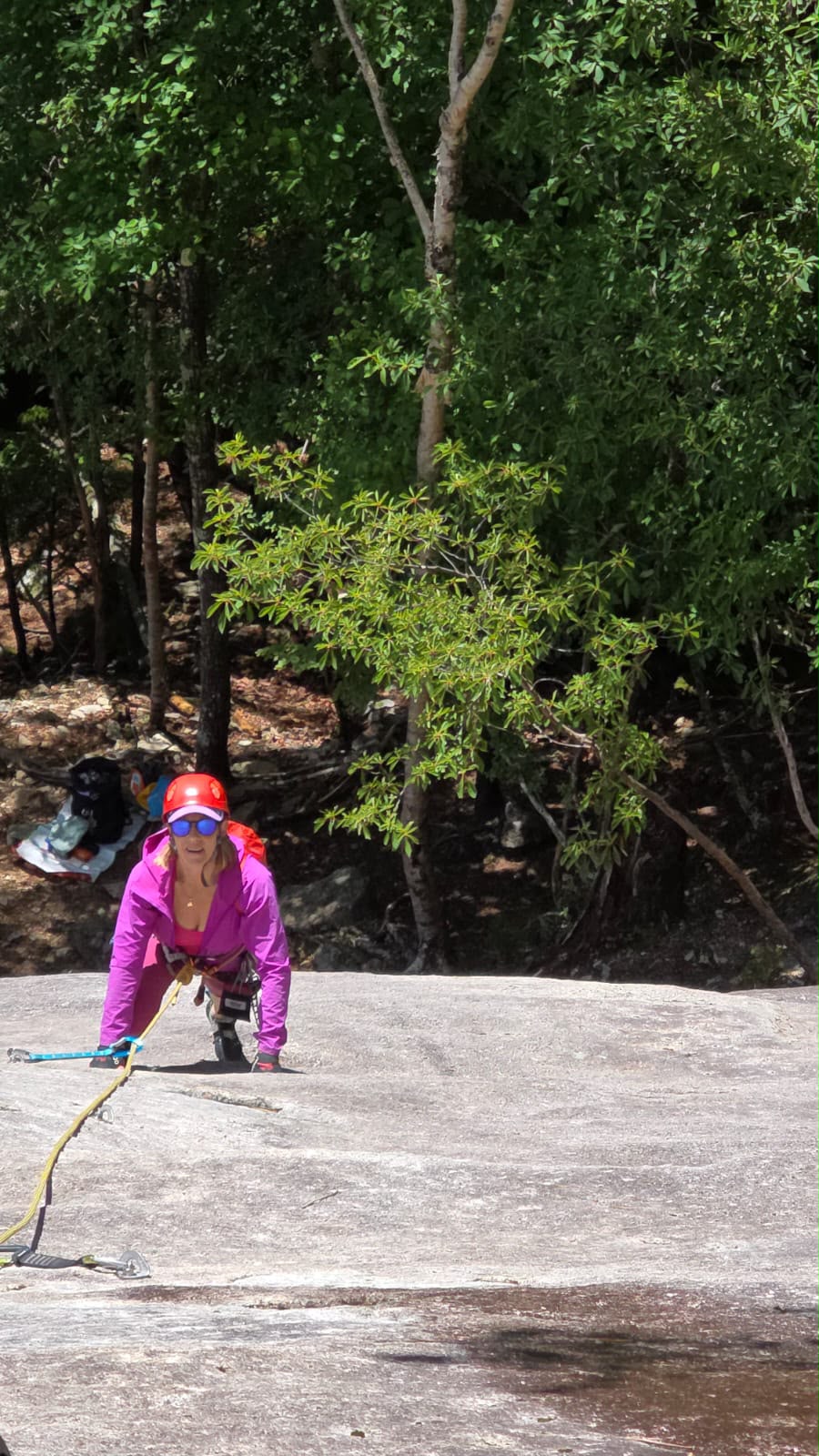
Mini crags are hard to find and even moderate grades require attention. Footwork matters. Body position matters. Headspace really matters. Most climbs were graded in the US/Yosemite System (YDS) and they were tough.
And the local climbers are ninja. All of them.
Midway through, we switched to Tao, a Chinese/Japanese professional guide.
Different level.
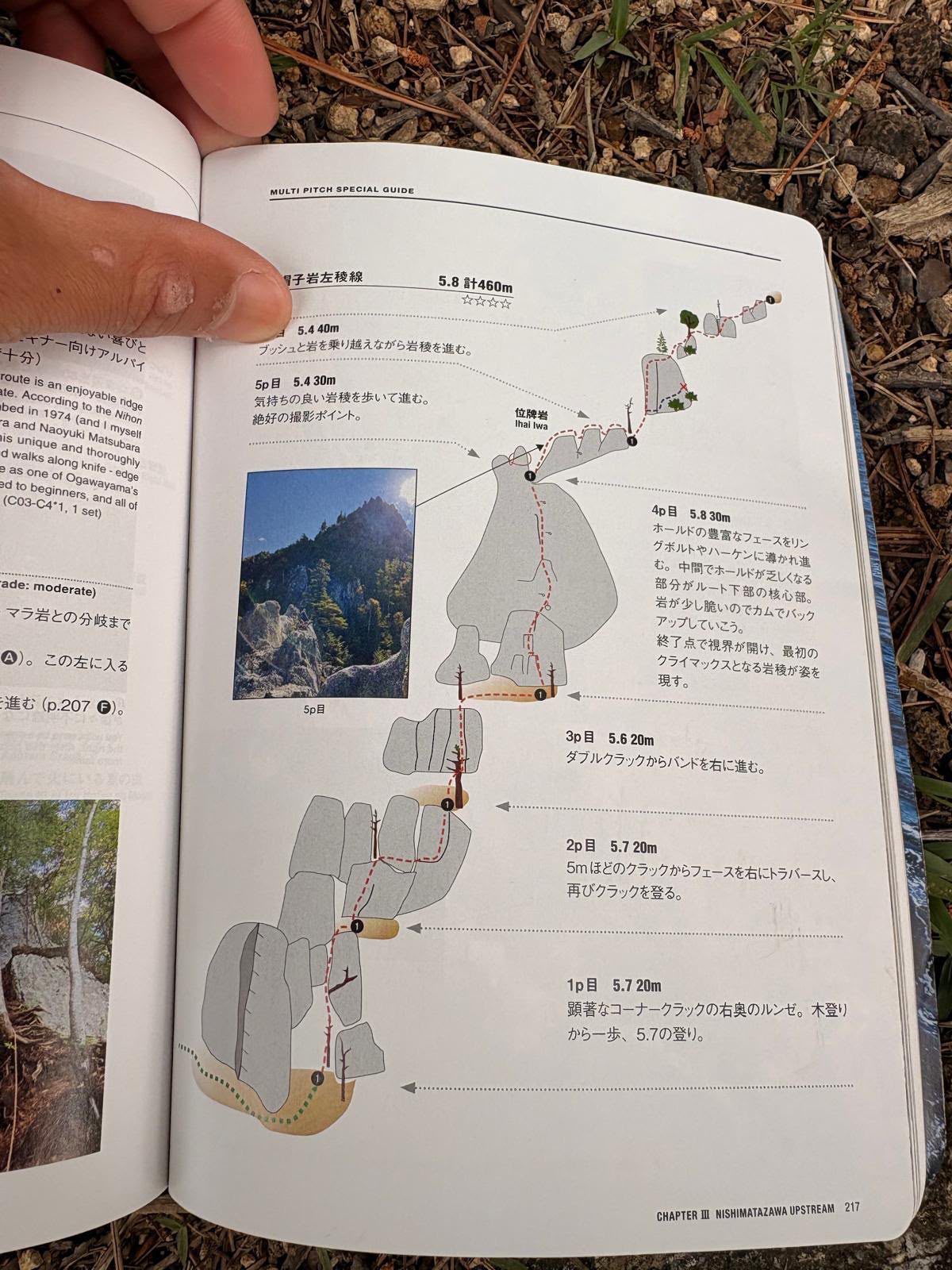
Calm, precise, efficient. No fluff. Good English. Knew where the iconic 3 -4 star multi pitch climbs were and great at route finding.
We stepped onto the multi pitch routes and loved it:
And this is where Ogawayama stopped being “good climbing” and became something else entirely.
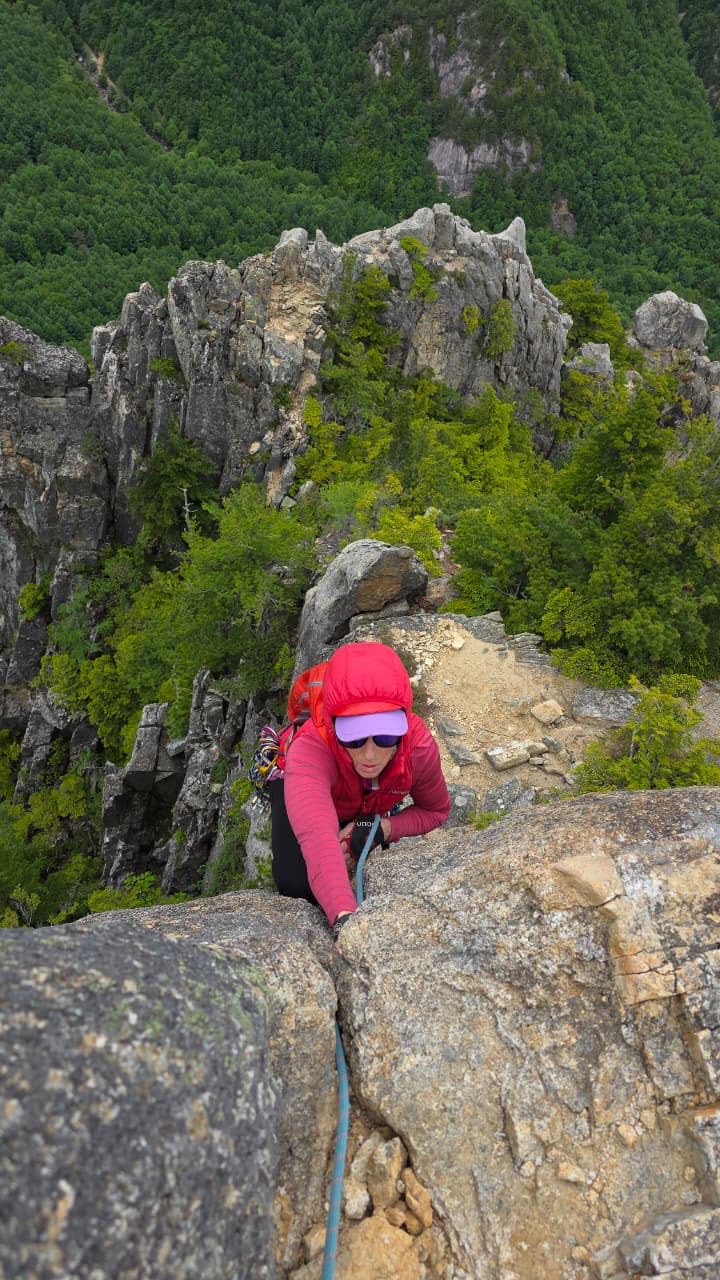
These multi-pitch routes aren’t just up-and-down affairs.
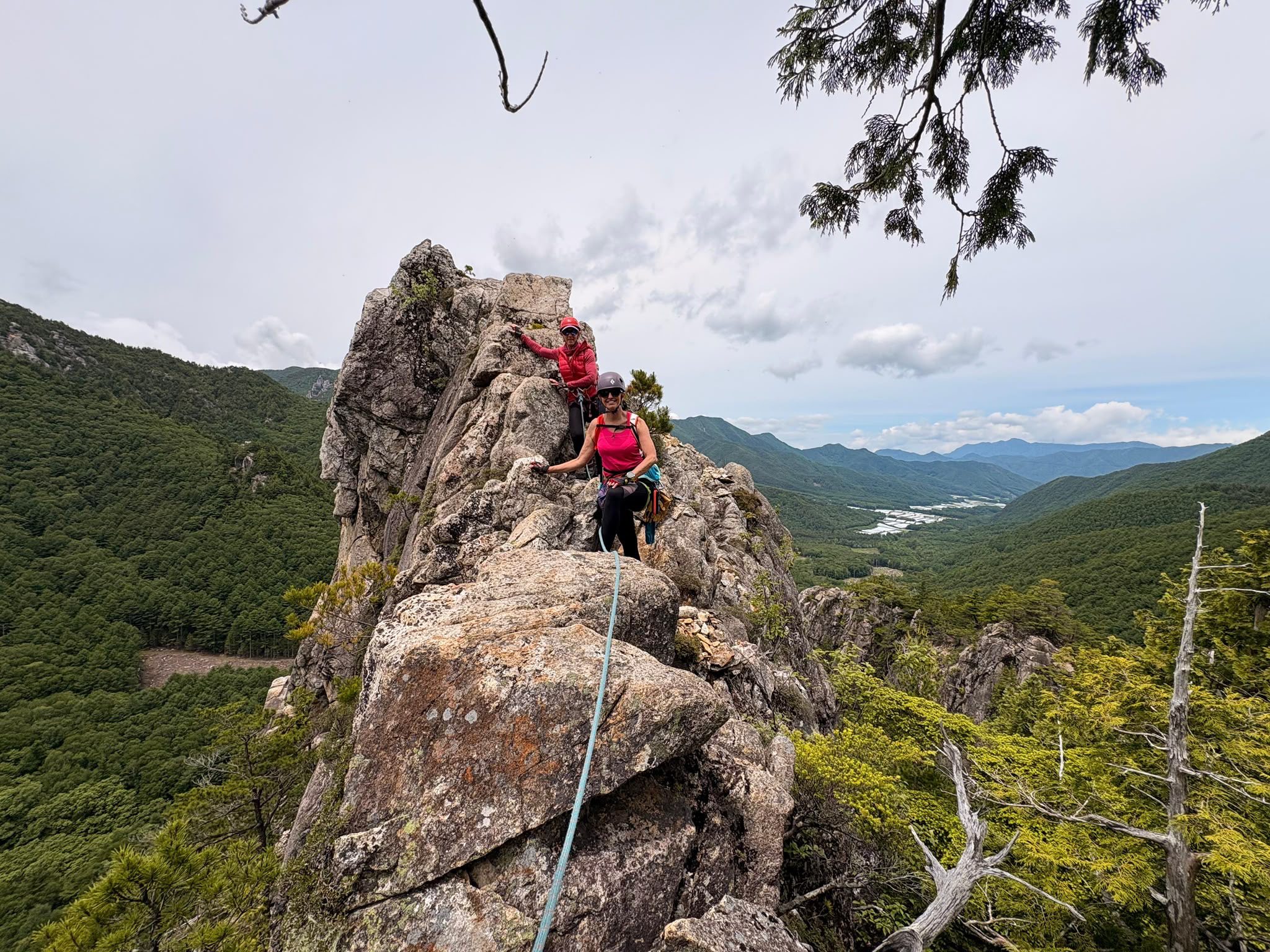
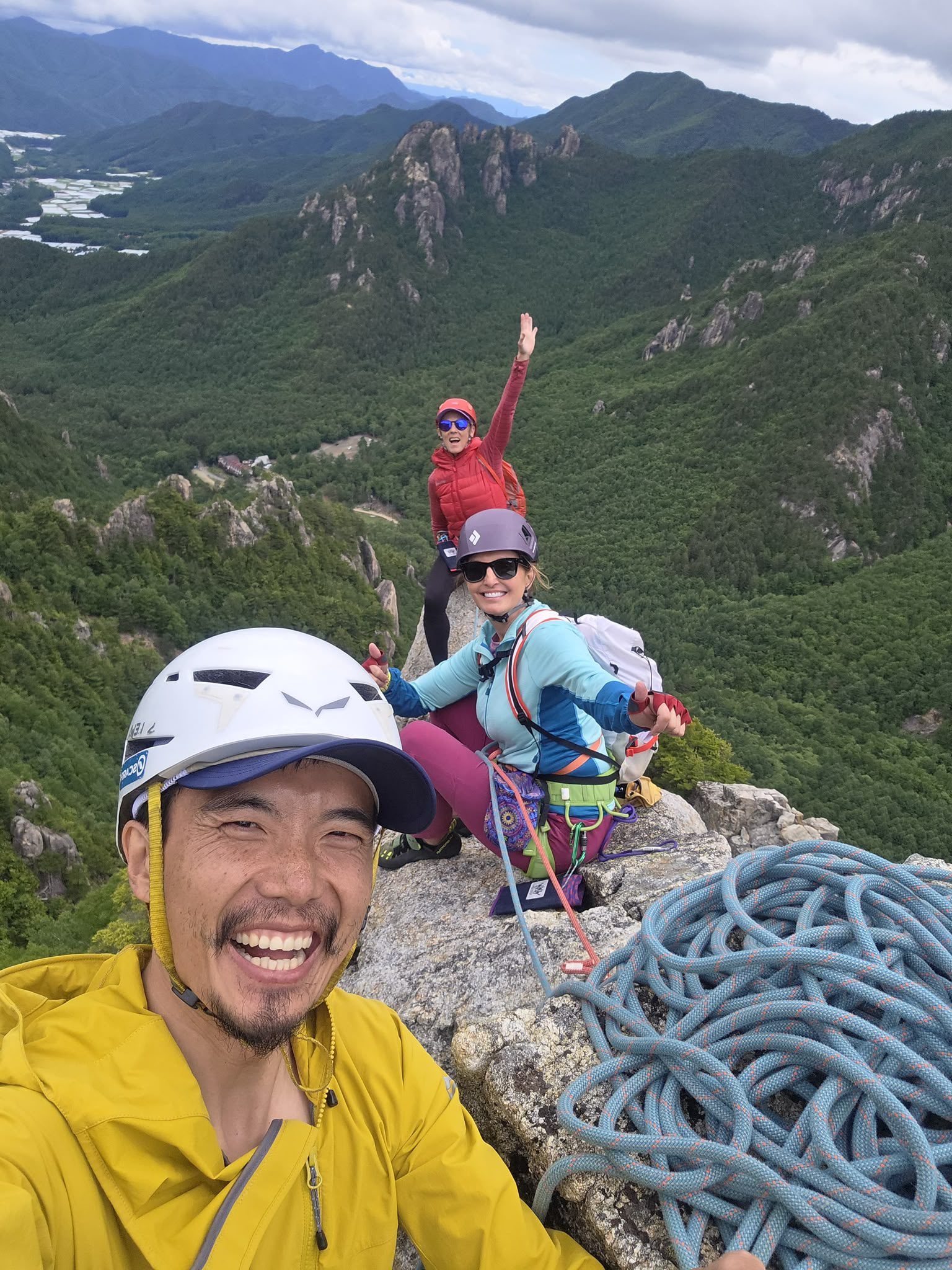
"They traverse. You climb a steep wall then traverse along a knife edge. You teeter along the spine of the ever taller granite pyramids like you’re climbing the spikes of a gargantuan stegosauras."
At one point we were moving across an exposed ridge, forest dropping away below us, and it hit me:
This is what we think we’re chasing all the time - but rarely actually find.
Not grades. Not ticks.
Just full adventure in spectacular mountains.
No distraction. No noise. Just you, the rock, and the next hold.
And yes, the descent matters too
Abseils. Scrambling. River crossings. Route finding on the way down.
It’s not packaged up neatly for you. Without a guide prepare to get lost.
Every day followed the same rhythm:
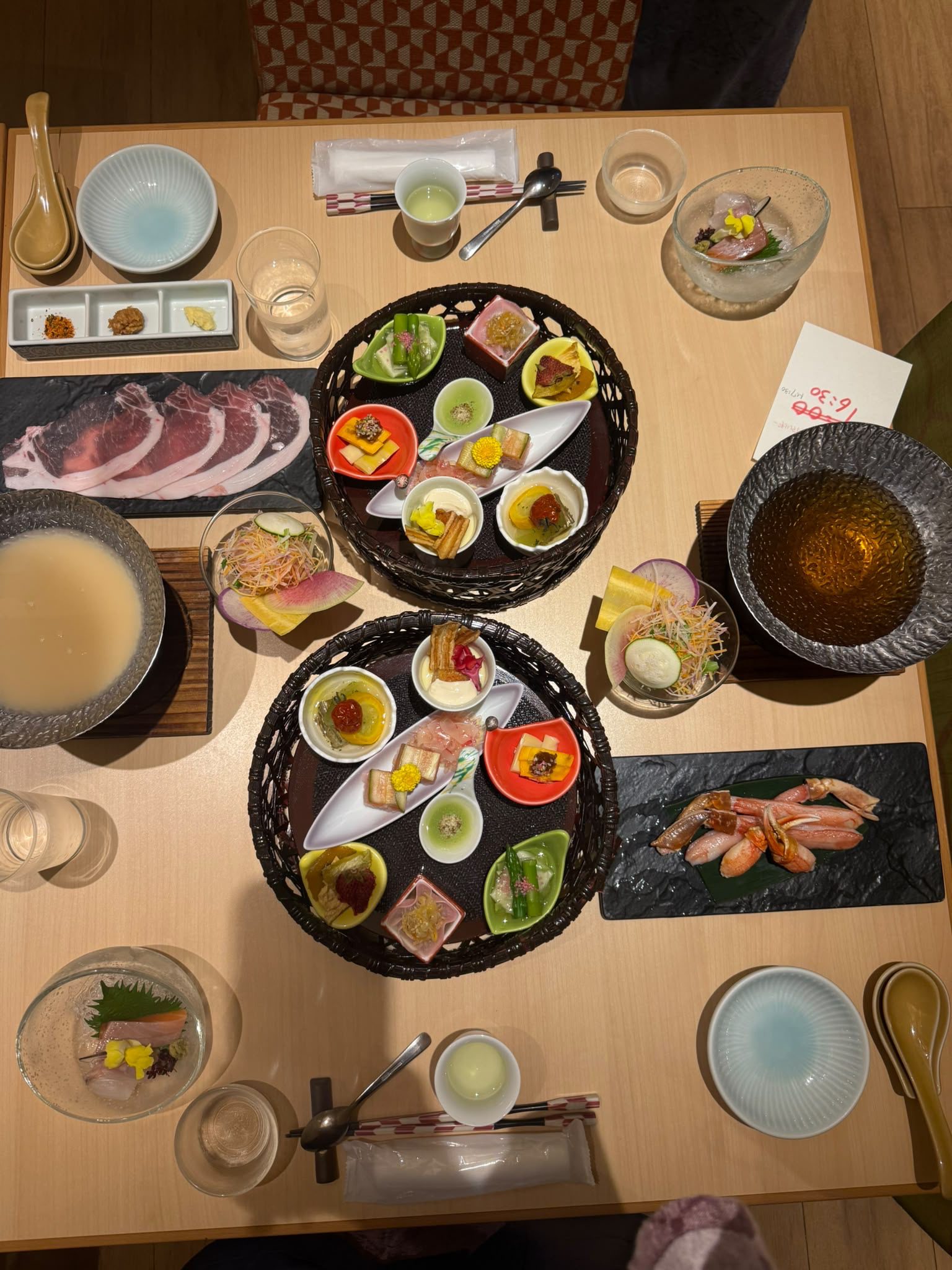
Traditional Japanese degustation brekky, Climb all day. Come back tired. Eat like royalty. Soak. Sleep.
The Japanese-style dinners were next level. Multiple courses, seasonal, generous to the point where we were packing leftovers for lunch the next day.
And then the onsen.
Outdoor. Quiet. No phones. No distractions. Just hot water and nature. Therapy at its best.
Eat, climb, soak.
Repeat.
Weather Gods
We went in June which is traditionally the rainy season.
Statistically, not smart.
Reality? Four days of mild temps, cloud cover, patches of sun, barely any wind.
You can plan endlessly, or you can accept that climbing trips will always involve an element of uncertainty.
Sometimes you get shut down.
Sometimes you don’t. This time we got lucky.
Eventually the weather turned—and instead of fighting it, we headed to Bessho Onsen, a 1,400-year-old hot spring village that feels like it operates on a completely different timeline.
We stayed at Uematsuya Ryokan—traditional, refined, quietly exceptional.
We hiked in the surrounding hills—misty, green, silent.
And then we soaked.
Proper mineral onsens. Sulphur-rich. Hot enough to cook eggs.
The standout? The roof top Red-Armoured Pot Bath, a one person onsen decorated with the Sanada clan crest.
You sit there and it hits you: We’ve turned “recovery” into an industry.
They’ve kept it as a ritual.
Food, Culture, and Slowing Down (Whether You Like It or Not)
Dinner at the ryokan wasn’t just food—it was ceremony.
Course after course, each one exquisite. Nothing rushed. Where food meets art meets architecture.
At one point, we got to hug a red samurai warrior who was beautifully woven into the experience.
Sounds like theatre—and it is—but it also forces you to slow down.
To be fully immersed in the culture.
To actually experience what you’re doing instead of ticking it off.
So… Should You Go?
If you’ve done climbing trips before and you’re wondering whether Japan is worth adding to the list?
Yes. Absolutely. But go in with your eyes open.
This isn’t a convenience destination.
It requires:
Ogawayama asks you to be present. To be adaptable. To actually climb.
The Bit That Stays With You
I went to Japan expecting good climbing. I didn’t expect it to feel this immersive. This close. This… complete.
And underneath it all, a quiet challenge:
Are you actually experiencing your climbing… or just collecting it?
Because Japan doesn’t let you stay on the surface for long. It pulls you in. Slows you down. Sharpens you up. And if you let it? You don’t just come back with great routes ticked off. You come back climbing better. Thinking better. And maybe - just maybe - showing up a little more fully the next time you tie in.
